
IPTV for Smart TV lets you stream live television, movies, and sports over your internet connection instead of relying on cable or satellite. It works on Samsung, LG, Sony, and Android-based TVs through apps like Smart IPTV, TiviMate, or IPTV Smarters. The core benefit is flexibility: you choose the content package, pay a lower monthly rate, and watch on any connected screen. However, not all IPTV services are equal. Legitimate providers operate with proper licensing, while unverified ones carry security and legal risks. This guide explains how IPTV works, what it costs, and how to choose safely.
By the end of this article, you will know exactly which Smart TV platforms support IPTV, what internet speed you need, how to spot a trustworthy provider, and how to configure your TV in under ten minutes. We also compare IPTV against cable and mainstream streaming apps so you can make an evidence-based decision rather than a guess.
IPTV for Smart TV Summary
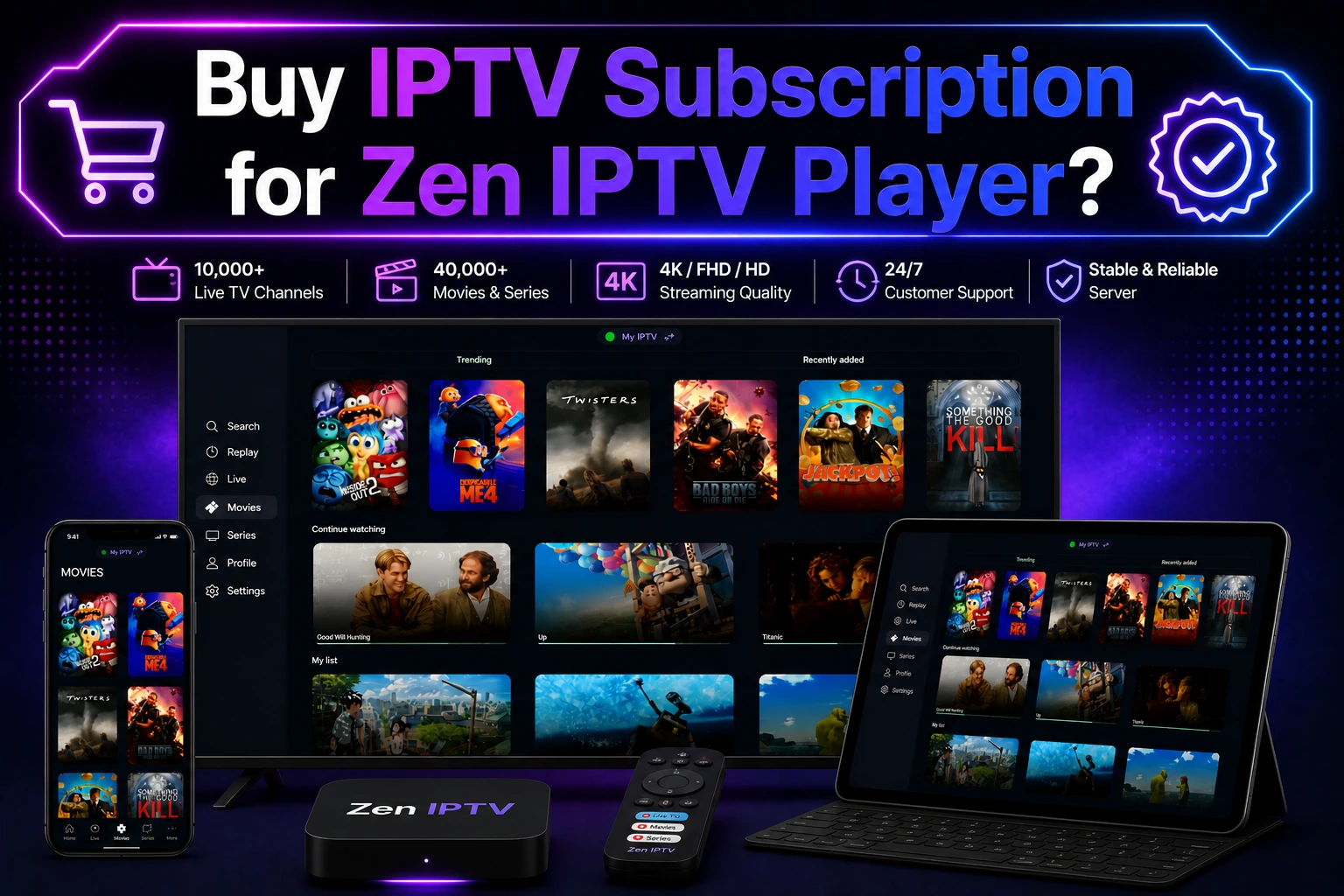
IPTV for Smart TV is a legal, cost-effective alternative to cable that streams live TV and on-demand content over your internet connection. A premium provider delivers 10,000+ live channels, 40,000+ VOD titles, and multi-device support for $10–$25 per month.
| Optimal ForCord-cutters and multi-device households wanting live TV + VOD under $25/month | Key AdvantageOne subscription replaces cable with 10,000+ live channels and 40,000+ VOD titles |
- ✓ Key Strength: Live sports, news, and international channels in one unified interface
- ✓ Key Strength: Works across Smart TV, smartphone, tablet, and PC with one account
- ✓ Peace of Mind: 24/7 customer support and a 7-day money-back guarantee
In This Guide
What Is IPTV for Smart TV and How Does It Work?
IPTV stands for Internet Protocol Television. Instead of receiving broadcast signals through an antenna, cable line, or satellite dish, IPTV delivers television content through the same IP networks that carry your internet traffic. On a Smart TV, this means you install an app that connects to a provider’s server. The server streams live channels, on-demand movies, and series directly to your television in real time.
There are three main content formats you will encounter:
- Live TV: Broadcast channels streamed in real time—news, sports, entertainment, and local programming.
- VOD (Video on Demand): A searchable library of movies and series you can watch at any time, similar to Netflix.
- Time-shifted TV: Catch-up TV that lets you rewind, pause, or start a program from the beginning even if it aired hours ago.
Smart TVs are particularly well suited for IPTV because they have built-in Wi-Fi, Ethernet ports, and native app stores. Samsung uses Tizen, LG uses webOS, Sony uses Google TV (Android TV), and budget brands like TCL and Hisense also run Android TV. Each platform supports different IPTV apps, and the setup varies slightly. The critical thing to understand is that the Smart TV is simply the display and the app player; the actual content originates from the IPTV provider’s servers. This architecture is what makes IPTV so flexible—you are not locked into a specific broadcaster’s schedule or hardware.
From a technical standpoint, IPTV uses unicast streaming (a dedicated connection between the server and your TV) for VOD and multicast for live channels. In practice, this means your internet connection quality directly affects your viewing experience. A wired Ethernet connection will always outperform Wi-Fi for 4K streams, and a provider with robust server infrastructure will deliver faster channel zapping and fewer buffering interruptions.
IPTV for Smart TV: Pros, Cons, and Key Comparisons
Before switching from cable or streaming apps, you need a clear-eyed view of the trade-offs. Here is an objective breakdown of what IPTV for Smart TV does well and where it falls short.
✅ Pros
|
⚠️ Cons
|
IPTV vs. Cable vs. Streaming Apps vs. Free IPTV
| Feature / Metric | IPTV for Smart TV | Cable TV | Streaming Apps (YouTube TV, Netflix) | Free IPTV |
|---|---|---|---|---|
| Average Monthly Cost | $10–$25 | $50–$150+ | $10–$75 | $0 (but risky) |
| Live Channels | 3,000–20,000+ | 100–300 | 85–100+ (YouTube TV) | 500–1,000+ (unstable) |
| VOD Library | 20,000–60,000+ titles | Limited | Large (Netflix, Prime) | Minimal |
| Setup Difficulty | Moderate (app install) | Professional install | Easy | Moderate (sideloading) |
| Contract Required | No | Often 1–2 years | No | No |
| Legal Risk | Low (with licensed providers) | None | None | High |
| Internet Speed Needed | 25–50 Mbps | N/A | 15–25 Mbps | 25 Mbps+ |
| Device Support | Smart TV, phone, tablet, PC | TV only | Smart TV, phone, tablet | Smart TV, phone |
Cost-Benefit Analysis and Buyer Considerations
The average American household spends about $100 per month on cable television. IPTV for Smart TV typically costs between $10 and $25 per month for a premium package. That translates to an annual saving of $900 to $1,080. Even when you factor in a high-speed internet plan—which you likely already have for other devices—the total cost of ownership remains significantly lower than cable.
Who Benefits Most from IPTV for Smart TV
- Cord-cutters who want live TV without cable contracts or equipment rentals.
- Sports fans who need access to regional and international sports channels that cable often omits.
- Expatriates and multilingual households wanting channels from their home country.
- Budget-conscious families who want a large VOD library at a fraction of the cost of bundling Netflix, Disney+, and HBO Max.
Who Should Avoid IPTV
- Users with unreliable internet connections below 25 Mbps.
- Those who prefer the simplicity of a single, all-in-one streaming service.
- Users unwilling to troubleshoot app installations or EPG configurations.
Buyer Considerations: How to Evaluate a Provider
Before committing to an IPTV provider for your Smart TV, evaluate these five factors:
- Licensing and legality. A legitimate provider holds broadcasting rights for the channels it offers. Look for clear company information, terms of service, and a physical address. Avoid providers that advertise “all channels free” or “lifetime access”—these are red flags for unauthorized streams.
- App compatibility. Check whether the provider supports your TV’s operating system. Samsung Tizen and LG webOS have fewer IPTV apps than Android TV. If you own a Samsung or LG TV, you may need a dedicated app like Smart IPTV or IPTV Smarters that requires a one-time activation fee.
- Trial period. Reputable providers offer a 24-hour or 7-day trial for a nominal fee. Use this time to test channel loading speed, EPG accuracy, and buffering during peak hours (7–10 PM).
- Customer support. Test the provider’s support channel before subscribing. Send a pre-sales question and measure response time. A provider that takes more than 24 hours to respond will not help you when your stream drops during a live match.
- Simultaneous connections. If you have a multi-TV household, confirm the number of allowed concurrent streams. Most providers allow 1–2 connections; some offer 4K streams on one connection only.
Step-by-Step Setup Guide for IPTV on Smart TV
- Identify your TV’s OS: Go to Settings > About to see if you have Tizen (Samsung), webOS (LG), or Google TV/Android TV (Sony, TCL, Hisense).
- Install an IPTV player: For Android TV, download IPTV Smarters or TiviMate from the Google Play Store. For Samsung and LG, use Smart IPTV or SS IPTV from the official app store.
- Obtain your playlist: Your IPTV provider sends an M3U playlist URL or Xtream Codes (portal URL, username, password).
- Configure the app: Open the app, select “Add Playlist” or “Xtream Codes,” and paste the credentials.
- Load the EPG: Most apps auto-load the Electronic Program Guide. If not, paste the EPG URL provided by your service.
- Test and adjust: Switch between live TV, VOD, and catch-up. Adjust the video player settings (hardware decoding, buffer size) if you experience stuttering.
Pro tip: For the most stable connection, connect your Smart TV directly to your router via Ethernet cable rather than relying on Wi-Fi. This reduces latency and packet loss, especially for 4K streams.
The Bottom Line on IPTV Smart TV
IPTV for Smart TV is the most cost-effective way to cut the cord without losing access to live sports, news, or international channels. If you have a stable internet connection and want a full TV experience for under $25/month, this is a solid choice.
Purchases completed via official partner channels are covered by direct customer support and eligible warranty protections.
Frequently Asked Questions
Is IPTV for Smart TV legal in the United States and Europe?
IPTV technology itself is legal. The legality depends entirely on the provider’s licensing. If the provider holds broadcasting rights for the channels it offers, you are using a legitimate service. Unlicensed providers are illegal and can expose you to malware and legal liability. Always verify the provider’s licensing status before subscribing, and avoid services that advertise “all channels free” or “lifetime access.”
What internet speed do I need for IPTV on a Smart TV?
For HD channels, a minimum of 25 Mbps is recommended. For 4K/Ultra HD content, you will want at least 50 Mbps. A wired Ethernet connection is always more stable than Wi-Fi for streaming. If multiple devices share your connection, add 10 Mbps per additional active device to avoid buffering during peak usage.
Can I install IPTV on any Smart TV brand (Samsung, LG, Sony)?
Most modern Smart TVs support IPTV apps, but the installation method differs. Android TV (Sony, TCL, Hisense, Philips) has the widest app selection, including TiviMate and IPTV Smarters directly from the Google Play Store. Samsung (Tizen) and LG (webOS) require apps like Smart IPTV or SS IPTV from their official app stores. Older TVs may not have compatible apps, and some platforms require sideloading via USB or developer mode.
What is the difference between free IPTV and paid IPTV services?
Free IPTV services are often unlicensed, unstable, and frequently shut down without notice. They also carry significant malware risks and may expose your personal data. Paid IPTV services offer reliable streams, EPG support, customer service, and legal licensing. The cost is typically $10–$25 per month, which is still far cheaper than cable.
Will IPTV for Smart TV replace my cable subscription?
For most users, yes. IPTV offers more channels, a larger VOD library, and lower monthly costs than traditional cable. The main requirement is a stable internet connection of at least 25 Mbps. If you meet that threshold, you can comfortably replace cable with IPTV and save $75–$125 per month.
How do I update IPTV apps on my Smart TV?
On Android TV, go to the Google Play Store > My Apps > Update. On Samsung Tizen and LG webOS, go to the app store, find the app, and select Update. Some IPTV apps also have an in-app update checker. Keep your IPTV player updated to avoid stream compatibility issues and to benefit from security patches.
Do IPTV services work with VPNs on Smart TVs?
Most IPTV apps work with VPNs, but Smart TVs do not natively support VPN clients. You can configure a VPN at the router level or use a VPN-enabled DNS service. Some Android TV apps, like Surfshark and NordVPN, offer native TV apps. Note that some IPTV providers block known VPN addresses, so test your VPN before committing to a subscription.
What channels and content can I watch with IPTV on Smart TV?
Legitimate IPTV providers offer a mix of local broadcast channels, international channels, sports packages, news networks, and VOD libraries. The exact lineup depends on your provider and geographic region. Premium providers offer 10,000+ live channels and 40,000+ VOD titles, including 4K sports events, pay-per-view, and children’s programming.
Transparency & Disclosure: We independently evaluate products. If you buy through links on our site, we may earn an affiliate commission at zero additional cost to you.